The Lab
This is my place of personal wonder, invention and
AI intelligence that can make our world a healthier place.
(Low tech, high tech and everything in between)
L 01: Establishing Longevity at Birth
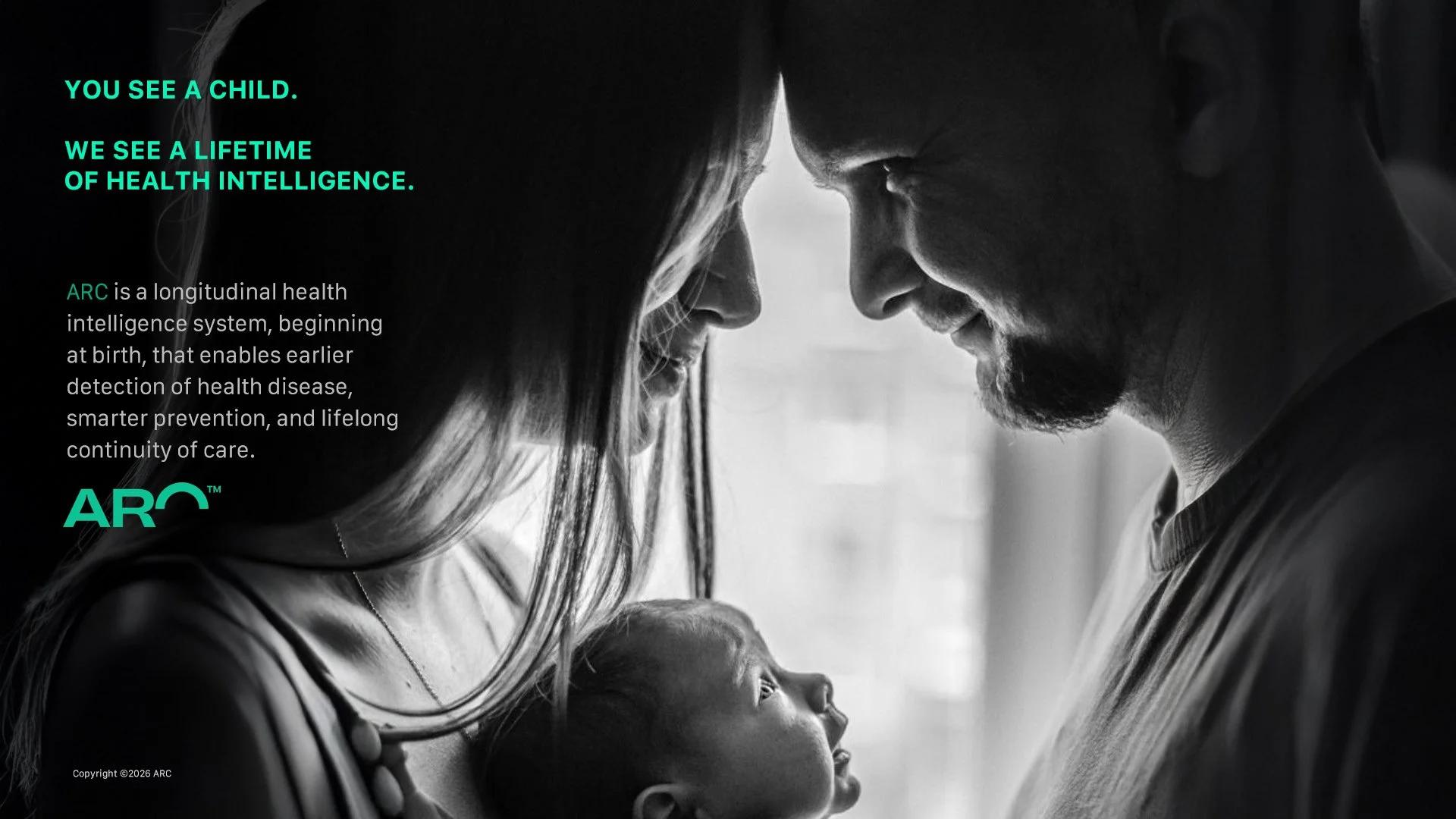
ARC is the first health intelligence system designed for a lifetime. ARC starts at birth to establish personal baselines, detect change earlier, and shift healthcare from reactive treatment to continuous prevention.
Healthcare Has Data, But No Continuity
Healthcare decisions are still made from fragments: isolated visits, lab results, and episodic diagnoses.
Disease is typically detected after symptoms appear, when treatment is harder and costs are higher.
The missing piece isn’t data. It’s longitudinal understanding.
Health Is a Continuous Signal
Health unfolds across a lifetime, but no infrastructure exists to establish baselines,
track change over decades, or govern health data across life stages.
ARC creates that foundation: life-course health intelligence designed to make prevention real.
It manages a continuous signal unfolding over time. With this continuity, prevention is possible.
ARC does not aim to predict outcomes. Its purpose is simpler, and more powerful: Detect meaningful deviation
from an individual’s baseline earlier, when intervention is easier, safer, and more effective.
1: The Market Gap: There is no governed infrastructure
for life-course health intelligence.
Health systems today have no reliable way to establish early
biological baselines, track meaningful changes
over decades, manage health data across life stages, or support clinicians with clear signals instead of noise.
As a result, even the most advanced hospitals still
rely on point-in-time snapshots, generic population thresholds,
and siloed data systems to make critical decisions.
Takeaway: Without a governed, life-course infrastructure, healthcare remains reactive, relying on fragmented snapshots instead of continuous,
meaningful signals over time.
2: The Solution: A governed, life-course longitudinal intelligence layer, beginning at birth.
This health intelligence system connects everyday clinical care, advanced blood diagnostics, (eg., Multi-omics and circulating biomarkers) are becoming clinically useful, value-based care is expanding, and modern data infrastructure can support permissioned, long-horizon longitudinal models, life-stage governance, and stage-specific AI into a single permissioned intelligence layer.
It begins by establishing an early biological baseline for every individual. Over time, the system builds continuous context that helps detect meaningful change. Clinicians receive clear, auditable, and explainable decision support to guide earlier and more
informed care.
Takeaway: A governed, life-course intelligence layer transforms fragmented data into continuous, explainable insight—enabling earlier detection, clearer decisions, and truly proactive care from birth onward.
3: The Impact: Prevention becomes operational, not aspirational.
For Clinicians, ARC enables earlier detection of meaningful health signals and reduces late-stage surprises. This allows for better timing of interventions and more informed clinical decisions.
For Health Systems, ARC helps reduce the burden of late-stage disease while lowering downstream costs. It supports a shift toward prevention and stronger alignment with value-based care models.
For Patients, ARC creates earlier options and less invasive care. It brings continuity across life stages—compressing morbidity not through prediction, but through earlier understanding.
Takeaway: ARC makes prevention real—enabling earlier detection, better-timed care, and reduced late-stage burden through continuous, life-course understanding.
4: Pilot Concept: Designed for health-system deployment, not consumer rollout.
Embed ARC within an integrated health system: This starts with enrolling life-stage cohorts from birth through adulthood and integrating EHR data, labs, imaging, and advanced blood diagnostics. The system measures earlier detection and reductions in late-stage disease while preserving clinician workflows—no alert fatigue and no consumer alarm noise.
Success is defined by measurable clinical outcomes: This means earlier signal detection and fewer late-stage interventions. Just as critical, the system maintains governed, longitudinal health intelligence that sustains value over time.
Takeaway: ARC is built for health systems—proving value through earlier detection, fewer late-stage interventions, and governed, longitudinal intelligence without disrupting clinical workflows.

POTENTIAL PARTNERSHIP:
Why This Is Adjacent to Palantir Foundry? ARC is not a replacement for Foundry.
It is a specific application of Foundry’s strengths.
ARC represents:
A health-native longitudinal use case that Foundry is uniquely positioned to power. Palantir would not be “entering longevity.” They would be operationalizing prevention infrastructure for health systems.
L 02: Restoring Dignity to Alzheimers Patients
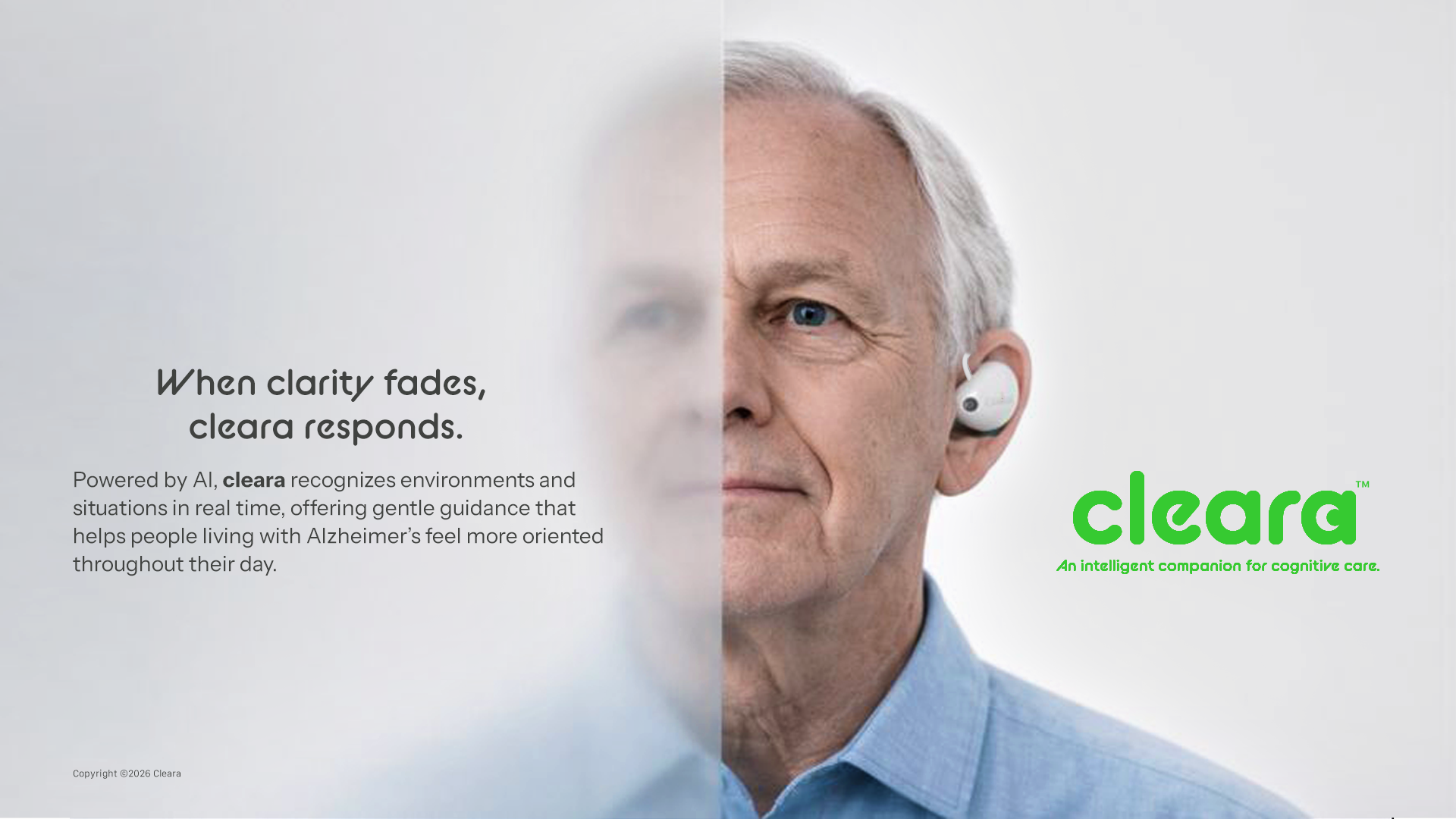
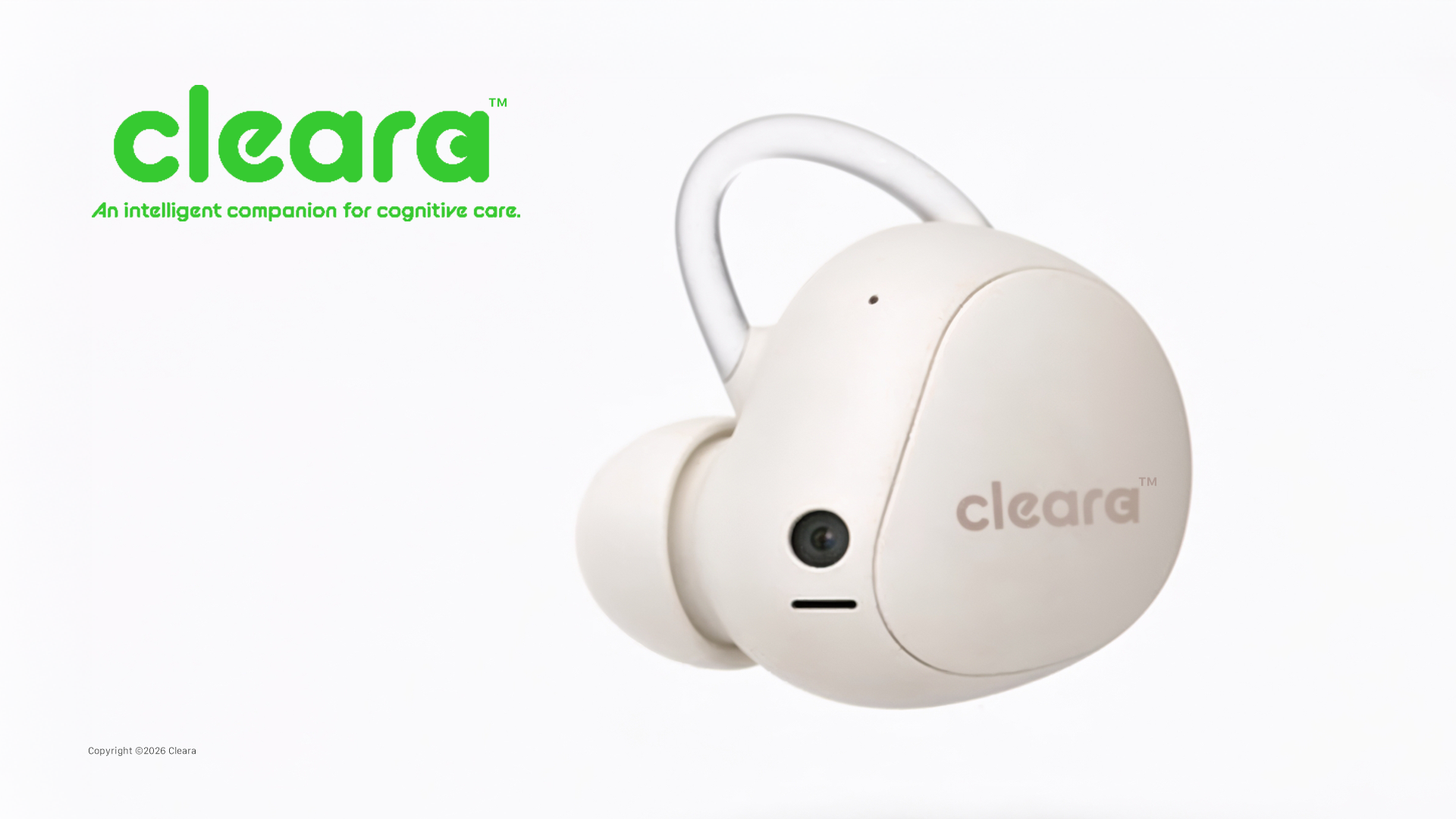
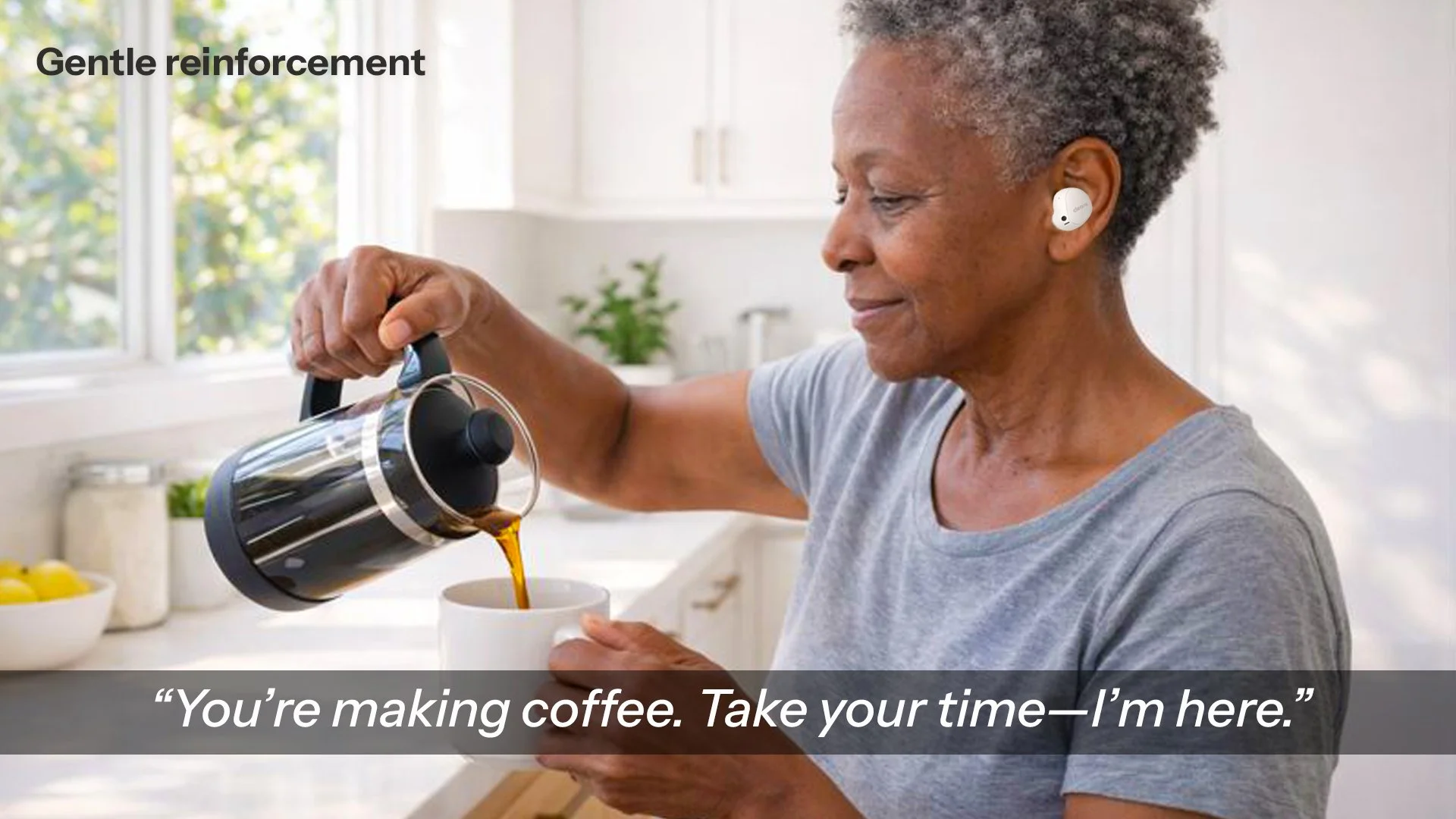
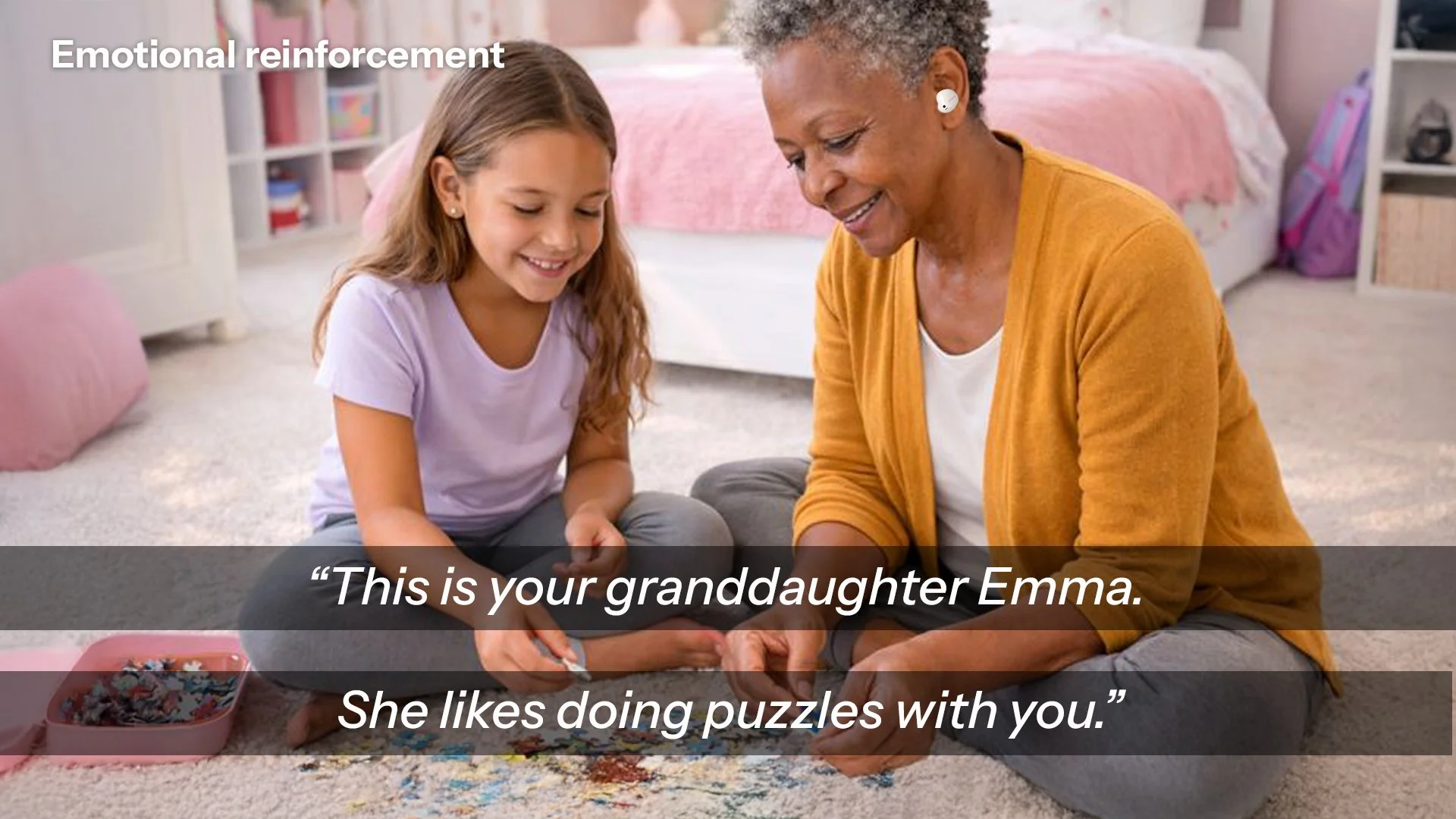
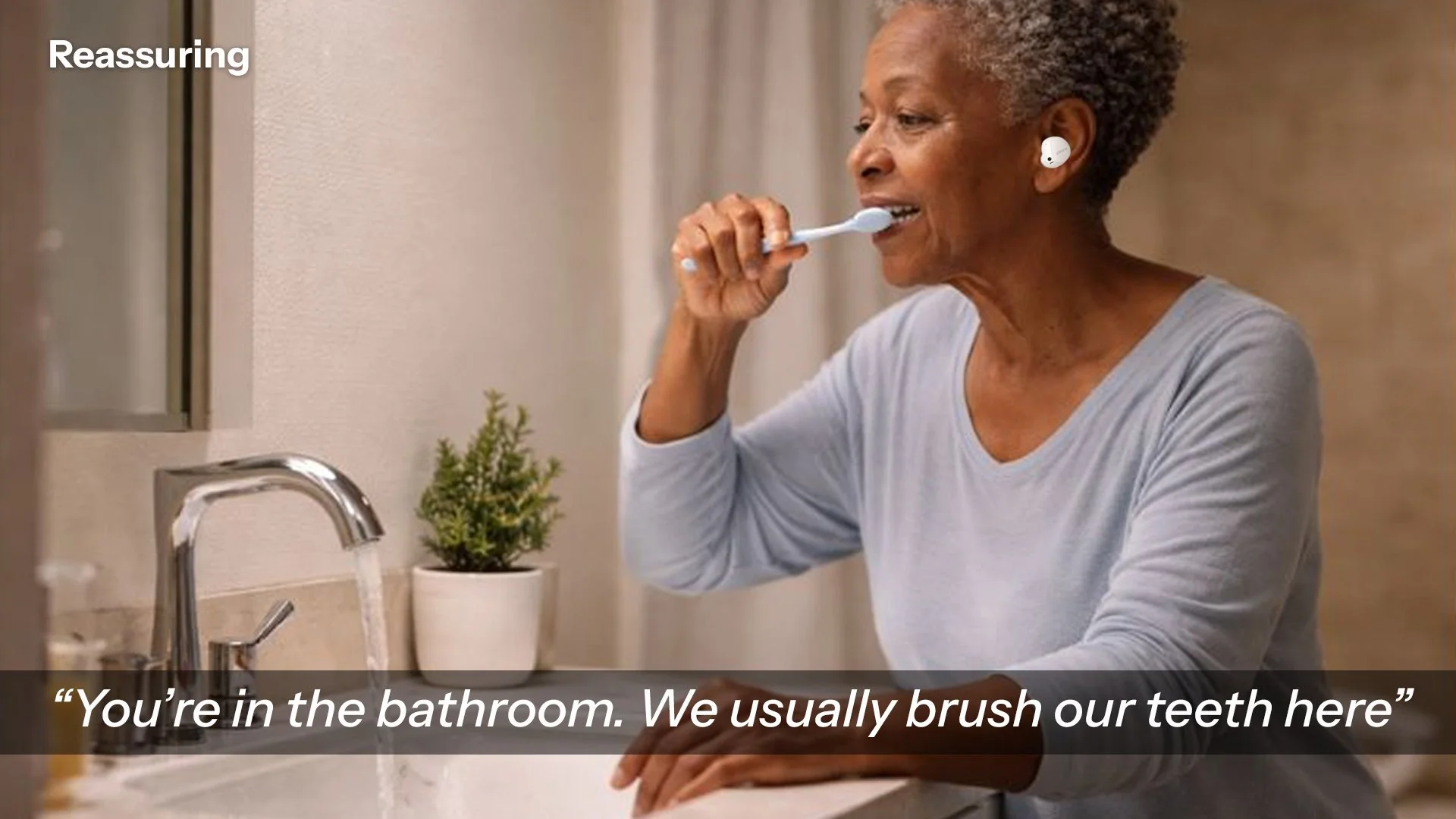
Introducing Cleara–An intelligent Alzheimers companion for cognitive care. Built around understanding, Cleara quietly supports people living with Alzheimer’s—offering guidance, reassurance, and presence when it matters most.
Powered by on-device AI, it listens, sees through subtle visual snapshots, and interprets surroundings
locally to understand what’s happening in the moment. Using this awareness, it delivers gentle voice prompts,
quiet reassurance, and confirmation during moments of uncertainty. CLEARA doesn’t instruct or replace care,
it supports orientation, dignity, and independence, moment by moment.
How It Works: CLEARA follows a simple, human logic:
Sense
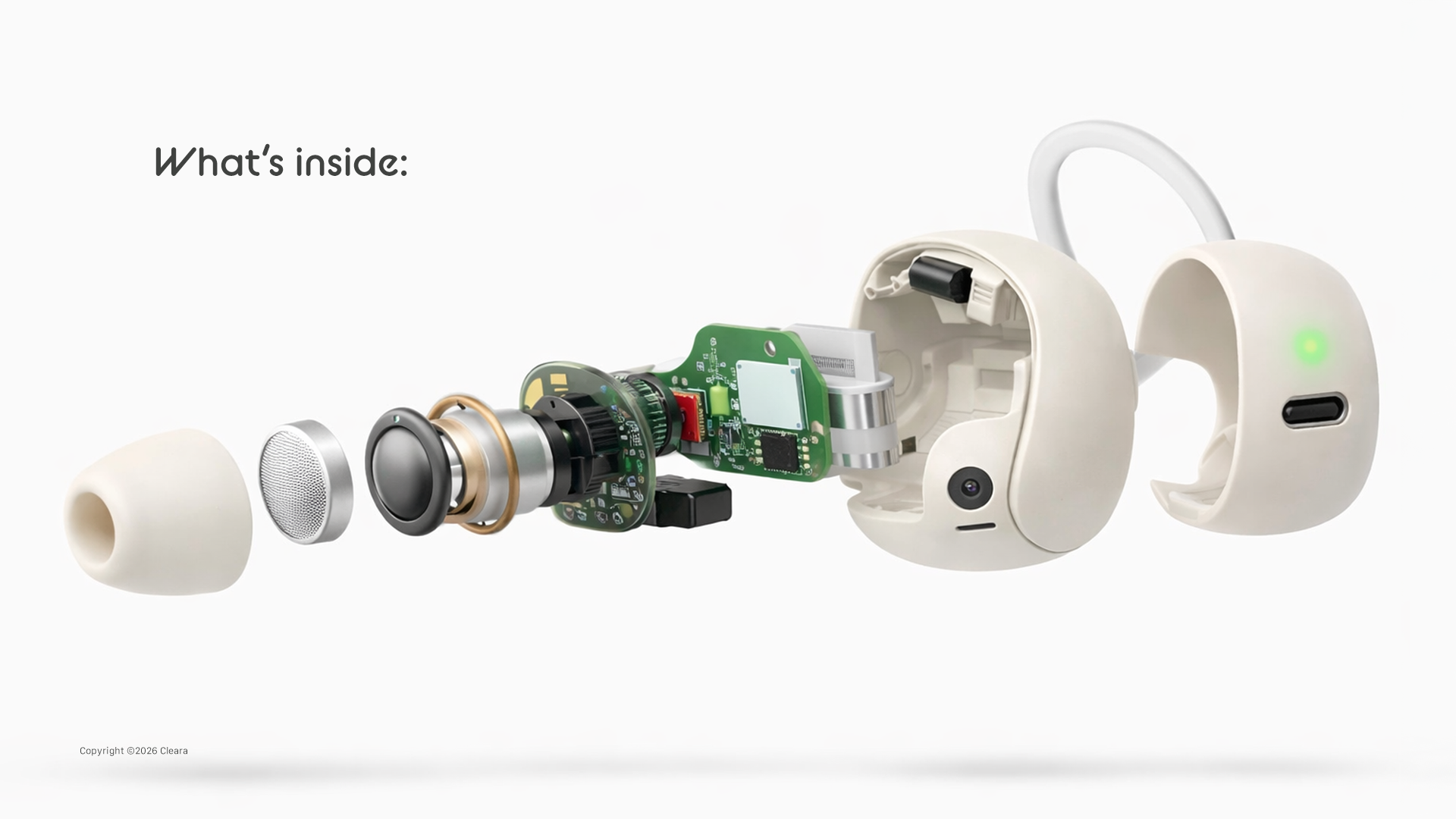
Microphone and camera capture environmental cues aligned to the wearer’s experience.
Interpret
On-device AI recognizes situations—objects, familiar faces, sounds, and context—without storing raw data.
Respond
CLEARA provides calm, timely guidance only when needed.
Learn
The system adapts over time, becoming more personalized while preserving privacy.

1: The Market Gap: No daily cognitive companion exists.
Today’s Alzheimer’s care relies on:
Medication, caregivers, and reactive tools
Most technology focuses on:
Monitoring, alerts, and after-the-fact safety
What’s missing:
Real-time orientation, dignity, and everyday capability
The opportunity:
Continuous support that feels human—not clinical or intrusive
Takeaway: A critical gap exists between monitoring and meaningful support—creating the need for a daily cognitive companion that helps people live, not just be watched.
2: The Solution: A calm, context-aware cognitive companion.
CLEARA is:
A discreet, ear-worn guide for daily confidence
Powered by on-device AI:
Listens, sees, and understands locally
What it provides:
Gentle guidance, reassurance, and confirmation, offering dignified independence
Takeaway: CLEARA delivers calm, real-time guidance—helping people stay oriented, confident, and independent in everyday moments.
3: The Impact: Everyday moments become navigable again.
For people living with Alzheimer’s, CLEARA:
Restores confidence, reduces anxiety, preserves independence
For caregivers and families, CLEARA:
Eases supervision, reassures quietly, protects dignity
For clinicians, CLEARA:
Extends care, supports function, aligns with human-centered treatment
CLEARA doesn’t stop the disease—it helps people live better with it.
Takeaway: CLEARA transforms daily life with Alzheimer’s—supporting independence, easing caregiving, and extending care so people can live better with the disease.
4: Market Size/Opportunity: A large, growing need with no daily-life solution.
The scale:
Millions today, doubling in the decades ahead
The demand:
Dignity-first, non-pharmacological support
The shift:
Technology that complements—not replaces—care
Takeaway: CLEARA meets a rapidly growing need for dignity-first, daily cognitive support—bridging cognitive care and aging-in-place without replacing human care.
L 03: Cardiac prevention between monitoring and implants
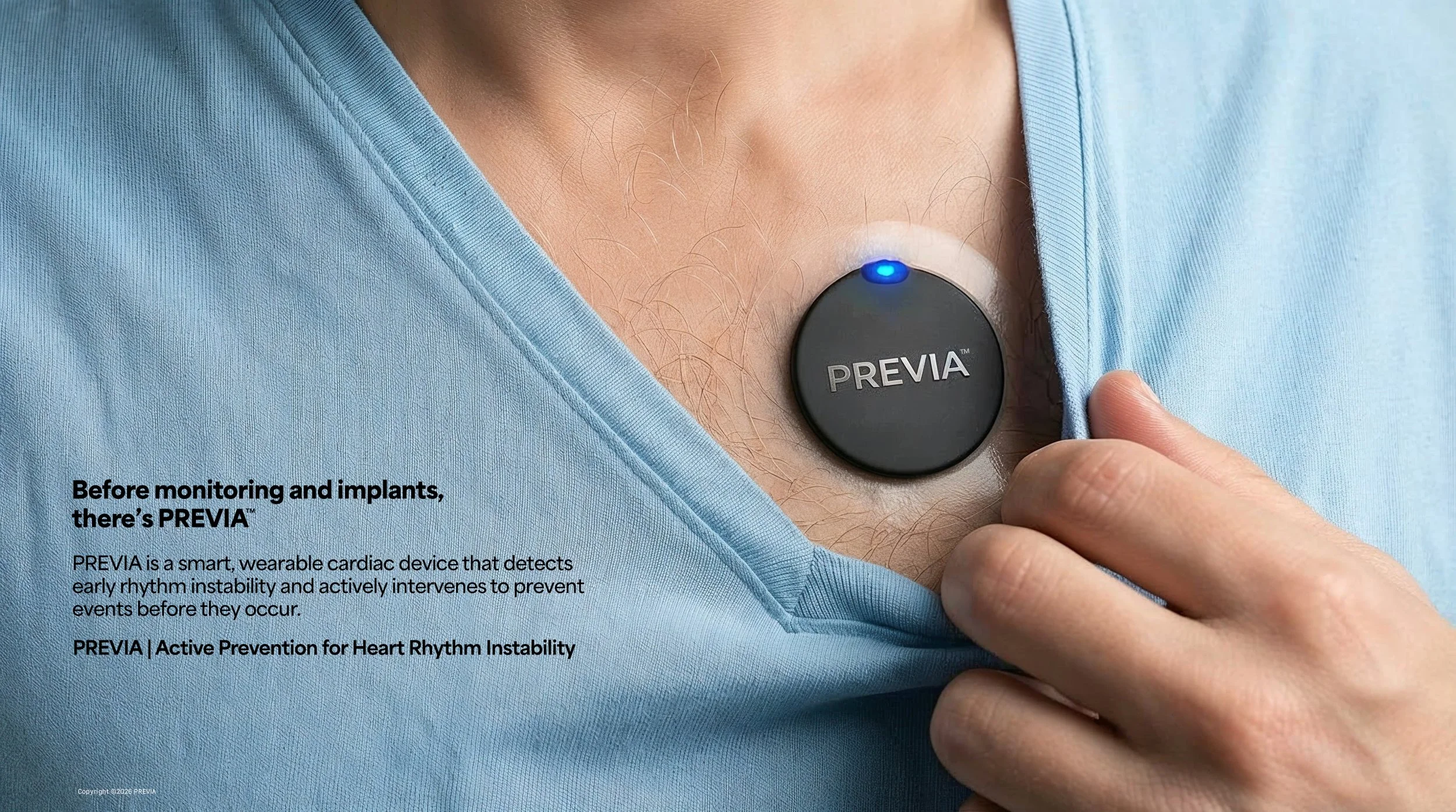
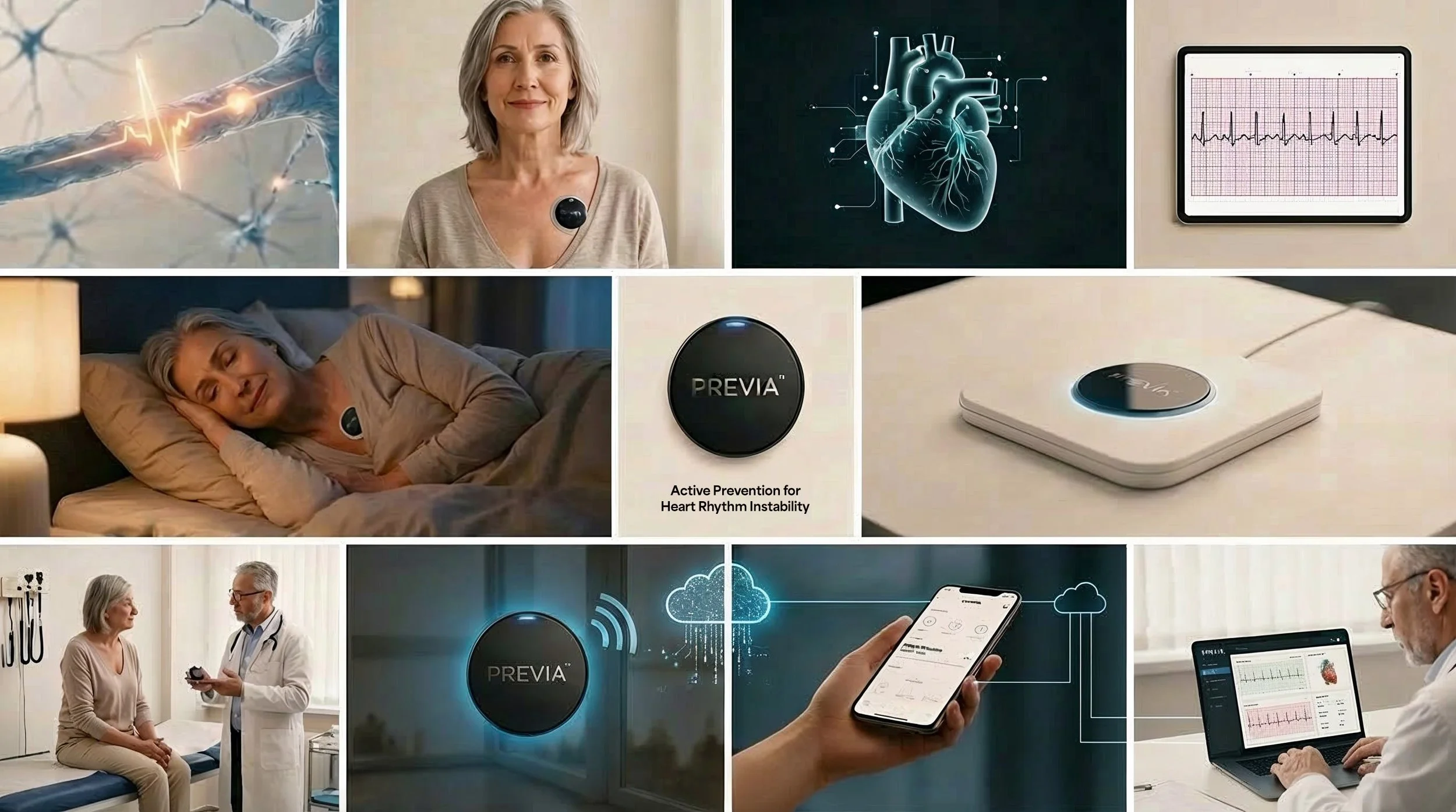
PREVIA offers active prevention for heart rhythm instability. A non-invasive wearable cardiac system that detects, predicts, and intervenes early to actively prevent escalation.
Most rhythm problems don’t begin as emergencies. They build gradually, often showing up as subtle signals
like palpitations, fatigue, dizziness, or shortness of breath. Modern care is designed to wait for moments of failure.
By the time devices act, the opportunity to prevent escalation has already passed. Patients are left in a gap between
passive monitoring and invasive implants.
PREVIA closes that gap—detecting and stabilizing instability before it escalates. It shifts rhythm care
from reaction to prevention, acting when it still matters.
1: Market Gap: Between monitoring and intervention there is no option.
Patients are either watched—or moved to implants
No standard care for early, unstable rhythm risk
“Wait and see” allows silent progression
Intervention comes only after escalation
Takeaway: This creates a structural gap in cardiology—millions of patients watched passively while risk quietly accumulates.
2: The Solution: Act before escalation
What PREVIA does
A non-invasive wearable that continuously senses cardiac and stress signals, learning each patient’s baseline to detect and predict early rhythm instability.
How it responds
Delivers gentle, real-time intervention to calm autonomic triggers, restore physiologic balance, and stop automatically once stability returns.
What it avoids
No surgery, no permanent hardware, no pacing or shock.
Takeaway: PREVIA introduces a new layer of care—intervening early to delay, reduce, and better time the need for implants.
3: The Impact: PREVIA shifts rhythm care from emergency response to continuous prevention.
Patients experience fewer episodes, fewer ER visits, and greater independence without implants.
Earlier visibility and upstream intervention for clinicians
Health systems benefit from lower costs and value-based alignment.
Takeaway: Remote monitoring workflows, giving clinicians earlier insight and fewer crisis-driven decisions.
4: Market Size & Opportunity: Large, growing, and underserved
Initial focus: early and intermittent arrhythmia patients
Expands into post-procedural care and recovery
Extends to value-based cardiology models
Broad potential across chronic disease management
Scalable medical device + services category over time
Takeaway: A focused entry point with clear expansion into a multi-billion-dollar medical device + services category.
L 04: Comforting Anxiety Day and Night
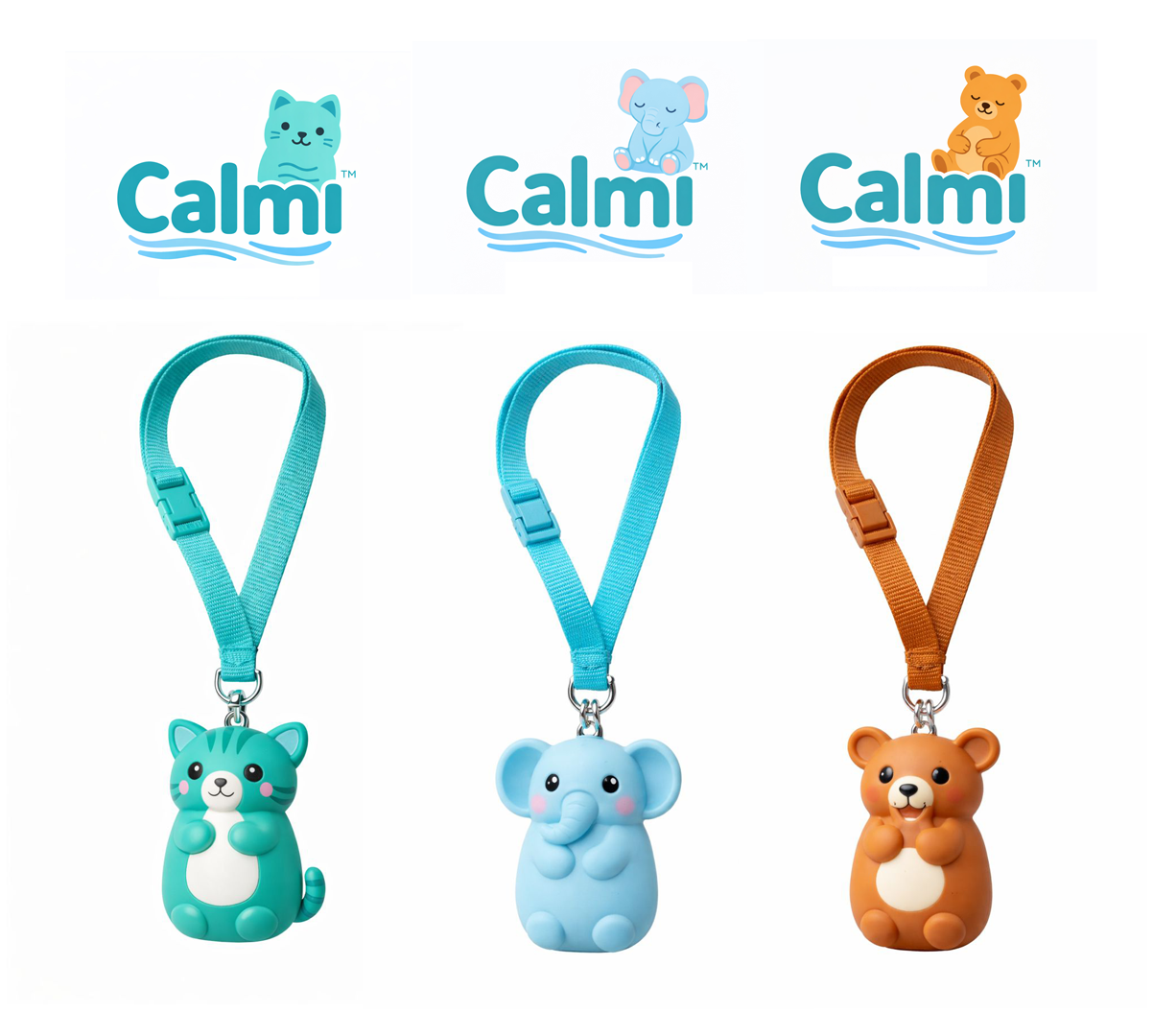
Meet Calmi — Little Breaths
That Make Big Feelings Feel Better
Calmi is An AI-enabled breathing companion that replaces instruction with comfort,
guiding children to slow their breath and feel safe during moments of stress, day or night.
During an anxious moment, children don’t need to be told to calm down,
they need to feel safe enough to do it themselves.
Calmi uses gentle rhythm and responsive breathing cues to help regulate the body first,
so emotions can follow, naturally and independently.

How It Works
Senses Beathing
Calmi gently senses breathing through built-in airflow and motion sensors, detecting breathing rate and consistency while the child uses the device.
Responds & Reassures
When a steady, healthy breathing cadence is reached, Calmi responds with a warm, reassuring glow (low light) or subtle vibration (daylight). The response acts as positive feedback, encouraging the child to continue slow, steady breathing without words or instructions.
AI Interpretation
Using on-device AI, Calmi interprets breathing patterns in real time—recognizing when breaths begin to slow, deepen,
and settle into a calmer rhythm.
Learns & Adapts
With repeated use, Calmi learns each child’s natural calming rhythm and adapts over time—becoming more personalized, supportive, and intuitive with every session.
1: The Market Gap: Nothing exists
Between therapy and toys, no solution exists for real-time regulation
Apps require screens; techniques require adults; toys distract but don’t calm
No tool works instantly, independently, and without instruction
Takeaway: A critical gap remains in pediatric mental health: real-time, child-first emotional regulation—exactly where Calmi lives.
2: The Impact: Calm, felt—not told
For children
Calmi slows breathing in anxious moments, builds confidence in self-soothing, and creates comfort without the need for words.
For parents
Calmi reduces stress at key moments, offers reassurance without constant intervention, and provides a trusted, science-aligned tool.
For families
Calmi normalizes emotional regulation, encourages independence without isolation, and supports healthier routines over time.
Takeaway: Calmi doesn’t distract from feelings—it helps children move through them.
3: The Solution: Calmi uses gentle, on-device intelligence to help children regulate breathing in real time—no screens, no instruction, no pressure.
Responds to each child’s breathing with soft light (night) and subtle vibrations (day)
Guides toward a steady, calming rhythm during moments of stress
Learns what “calm” feels like for each child and adapts over time
Builds self-regulation through experience, not explanation
Takeaway: Calmi makes calm something children can feel, learn, and access on their own—anytime, anywhere.
4: Market Size & Opportunity: Large, growing, and unmet
Over 7 million U.S. children diagnosed with anxiety; millions more affected without diagnosis
Rising need across stress, sleep disruption, and emotional dysregulation
Parents seeking screen-free, non-pharmaceutical, real-time solutions
No clear category leader in child-focused emotional regulation tools
Sits at the intersection of pediatric mental health, sleep, and preventive wellness
Takeaway: A rapidly expanding need with no defined leader—positioning Calmi to own the category.